By Bilkis Abdulraheem Lawal
The Lagos State Government has reaffirmed its commitment to empowering young people as key partners in driving climate justice and sustainable development, stressing that youths are not just leaders of tomorrow but implementers of today.
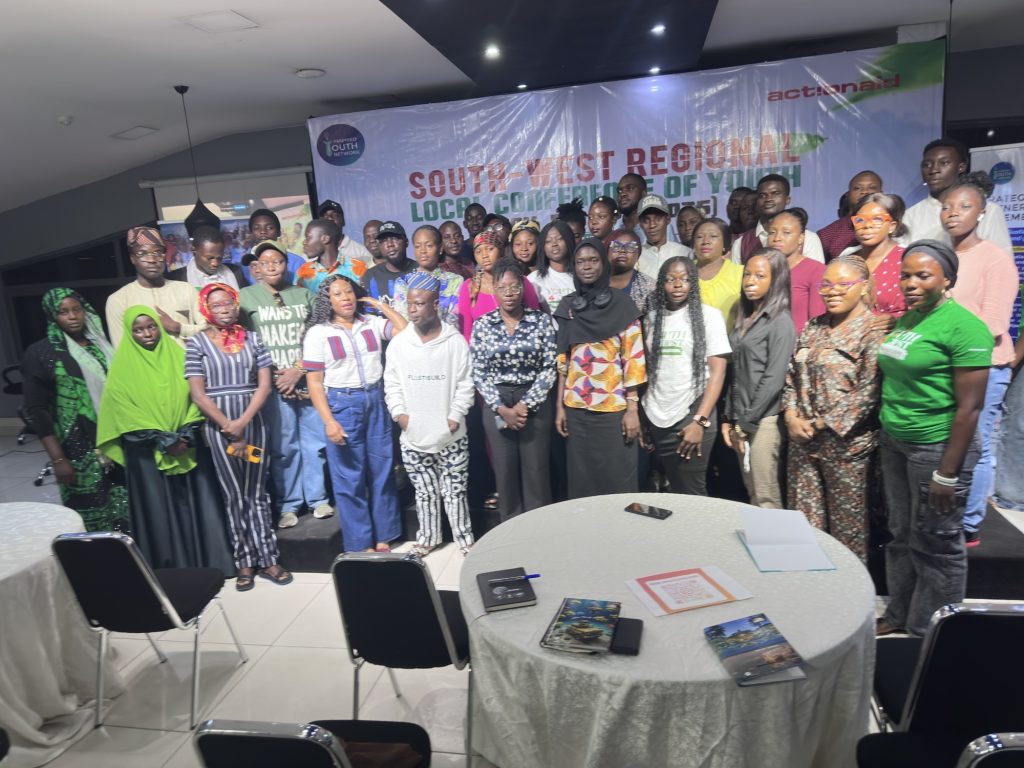
Speaking at the Southwest Regional Local Conference of Youth (LCOY) 2025 in Lagos, the Special Adviser to the Governor on Climate Change and Circular Economy, Mrs. Titilayo Oshodi, said the state is proud to be part of a growing movement where young Nigerians are taking ownership of their future and shaping climate solutions that work for their communities.
According to her, the conference theme, “Youth at the Forefront of Climate Justice: Accelerating Action for a Just Transition,” reflects the urgent need to promote fairness, inclusivity, and accountability in climate response. “Climate justice goes beyond reducing carbon emissions,” she noted. “It demands that we address not only environmental degradation but also the social inequalities that make certain communities more vulnerable.”
Mrs. Oshodi explained that, for Lagos, climate justice means ensuring that people most affected by flooding, waste pollution, and extreme weather, particularly those in informal and low-income communities, are not left behind in the transition to a greener economy.
She described sustainability as an opportunity for every youth, artisan, and innovator to find their place in the city’s evolving green ecosystem.
Highlighting new innovations in waste management, she announced that the state is collaborating with the private sector to deploy hundreds of electric tricycles for waste collection across Lagos. The initiative aims to overcome the logistical barriers that have hindered efficient recycling and to empower micro-enterprises through affordable access to sustainable transport.
The Special Adviser to the governor said over 700 small businesses and MSMEs in the circular economy have already expressed interest in joining the initiative, which supports Lagos’s “waste-to-wealth” drive.
She urged youths to combine passion with structure, emphasising that activism must evolve into policy influence and innovation. “Your digital fluency, creativity, and resilience are key drivers of transformation,” she said. “However, passion must meet structure, and advocacy must shape systems.”
Mrs. Oshodi reaffirmed the Sanwo-Olu administration’s ongoing efforts to integrate climate resilience and innovation into governance through initiatives such as Eko Circular, Let Lagos Breathe, and Leave No One Behind. These, she said, are designed not only to protect the environment but to create jobs and promote dignity for residents.
Also speaking, Mrs. Bukola Odunsi, who represented Lagos state Permanent Secretary, Ministry of Youth and Social Development, reaffirmed that youths are “active stakeholders, not beneficiaries.”
She commended the organisers for creating a space where youth voices and innovations could be amplified ahead of global climate discussions.
Mr. Adamu Garba of the Nigeria Climate Information Centre drew attention to the low level of climate awareness in Nigeria, noting that only 17 percent of citizens understand the concept of climate change.
He urged young people to translate awareness into tangible climate action.
ActionAid Nigeria Advocates for Early Climate Education
Ms. Blessings Ifemenam, Programme Advisor at ActionAid Nigeria, described climate change as a lived reality disrupting livelihoods across the country. She said that changing rainfall patterns, rising temperatures, and extreme weather are increasingly affecting women and smallholder farmers, groups that are most vulnerable to environmental shocks.
Ms Ifemenam lauded the conference as a timely platform for young innovators and activists to share practical ideas for resilience and a just transition. “Young Nigerians have the creativity and energy to lead change,” she said, “but they often face barriers such as limited access to funding, mentorship, and institutional support.”
She urged the government and private sector to create inclusive systems that support youth-led innovations in renewable energy, waste management, and sustainable agriculture. She also called for climate education to begin early in schools and communities, adding that “if young people are given the knowledge, resources, and trust, they will build a cleaner, fairer, and safer future for all.”
Founder of GoGirl Africa, Ms Deborah Odeniyi, said women and youths face severe challenges during flooding and other climate-related disasters. She added that women, who are mostly responsible for household cooking using firewood, also bear the economic and health burdens of environmental degradation.
Ms Odeniyi urged residents to prioritise cleanliness and proper waste disposal, warning against the indiscriminate dumping of refuse that worsens flooding in many communities.
Participants at the conference, including Lilian Aremu, who runs a clean-cooking enterprise, and Eunice Paul, a Lagos-based farmer, shared real-life experiences of how climate change is reshaping their work and communities. Both called for consistent support for youth-led innovation and environmental entrepreneurship.
The Southwest Regional LCOY 2025, organised by ActionAid Nigeria in partnership with the Inspired Youth Network, serves as a preparatory forum for the upcoming National Youth Climate Conference and Global Youth Climate Summit, designed to amplify young Nigerians’ voices in shaping national and global climate policy.
Leave a Reply