By Bilkis Abdulraheem Lawal
The National Population Commission (NPC), says the new Electronic Civil Registration and Vital Statistics system, (eCRVS) will replace the old paper-based system with a secure digital process that captures births, deaths, marriages, and other vital events in real time.
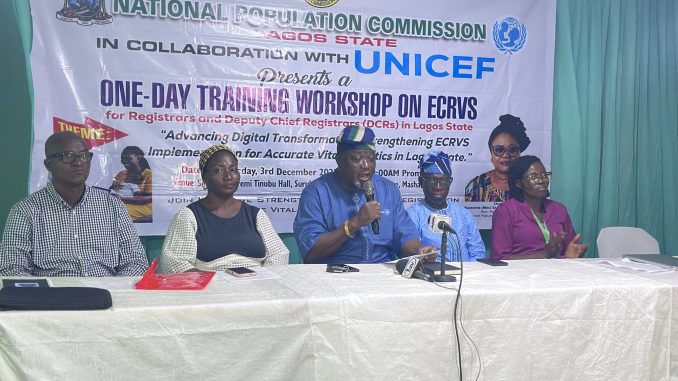
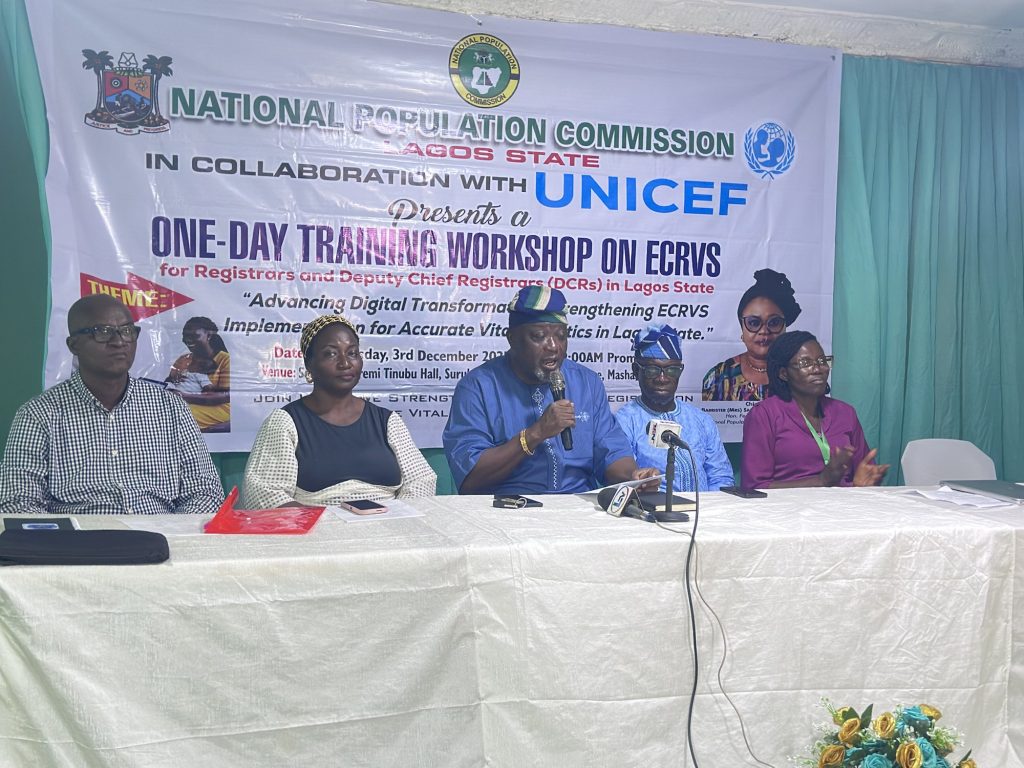
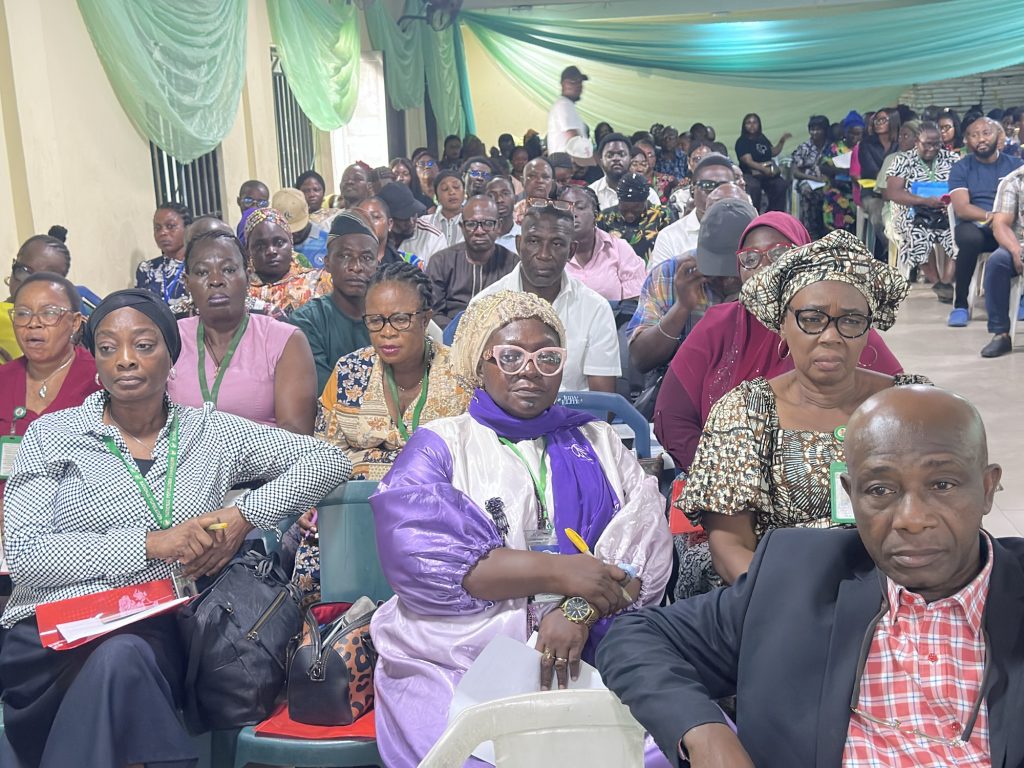
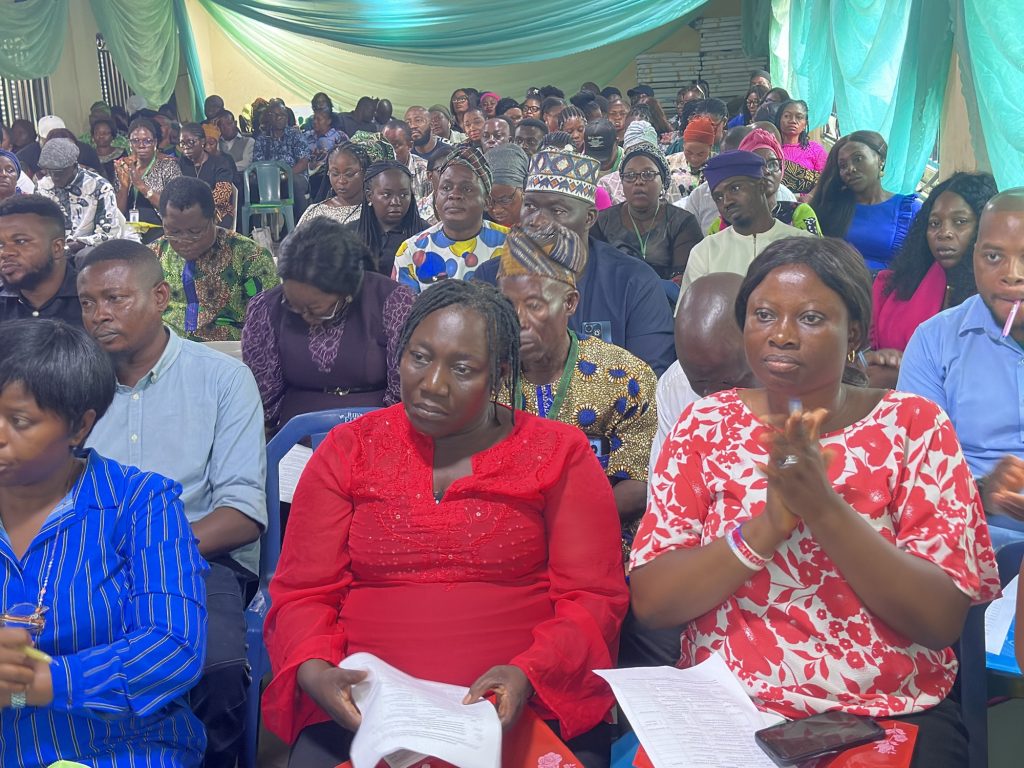
The Federal Commissioner for Lagos, Mrs. Saidat Olayinka Oladunjoye, made this known during a one-day training workshop jointly organised by NPC and UNICEF, for Registrars and Deputy Chief Registrars across all the 57 local government and local councils development areas of Lagos State, on the new Electronic Civil Registration and Vital Statistics system in Lagos State.
The commissioner who was represented by the State Director, Mr. Bamidele Sadiku, described the training as a major step in modernizing civil registration in Nigeria, adding that the platform will also help provide accurate data for national planning, reduce fraud, and support Nigeria’s target of legal identity for all by the year 2030.
Addressing participants, Oladunjoye said Lagos, being the nation’s commercial capital and most populous state, remained a natural frontrunner in embracing innovative governance systems.
She noted that the introduction of the eCRVS platform marks a fundamental shift from a paper-based, error-prone process to a secure and real-time digital ecosystem for recording births, deaths, marriages, adoptions, stillbirths, and other life events.
“eCRVS is not just a technological upgrade; it is a fundamental shift in how we capture, store, protect, and utilize the life events of every Nigerian,” she said. “With this system, every child will be registered at birth and receive a legal identity from day one.”
According to her, the digital rollout will also ensure availability of accurate data for planning and policymaking, reduce fraud and duplicate registrations, strengthen interoperability with agencies such as NIMC, NHIS, INEC, and health institutions, and support Nigeria’s pursuit of Sustainable Development Goal 16.9, legal identity for all by 2030.
She emphasised that the success of the new system rests largely on Registrars, who serve as the Commission’s direct link with communities across local government areas.
Oladunjoye urged participants to “own the process” and ensure Lagos becomes a model state for seamless eCRVS implementation.
“Accurate and timely civil registration is the foundation of good governance,” she said.
The commissioner assured that the Commission is investing heavily in infrastructure to support the digital transition. These include upgrading registration centres, deploying solar solutions to electricity-challenged areas, and strengthening internet connectivity.
While giving an overview of challenges associated with the manual CRVS operations, the State Director, Mr. Sadiku, highlighted persistent issues affecting birth registration in Lagos, such as lack of registration materials, inadequate logistics to reach hard-to-access communities, and insufficient office space for NPC staff across LGAs.
The hands-on training covers workflows, use of tablets, the eCRVS application, data security, troubleshooting, and strategies for community sensitisation.
Leave a Reply